No slowing down for Gerard Schwarz, South Florida’s busiest conductor
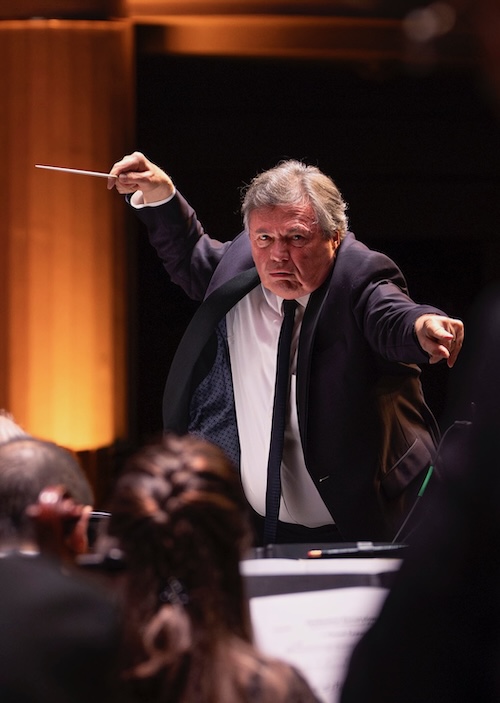
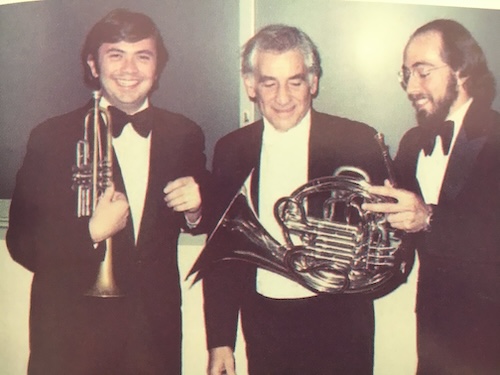
When Gerard Schwarz was a teenage trumpet student, he dreamed of being a member of the New York Philharmonic. At age 25, his dream came true as he became co-principal trumpet of that storied ensemble, the youngest member in the orchestra’s history.
Still, while focusing on orchestral playing and teaching (including Juilliard), Schwarz questioned whether he wanted continue doing that for the rest of his life. “I thought I could have more to say musically,” Schwarz recently recalled in an SFCR interview. The result has been an international conducting career for over 50 years that has taken him to orchestras around the world.
Since 2019, the center of Schwarz’s podium activity has been South Florida. Schwarz, 78, is distinguished professor of conducting and orchestral studies at the University of Miami’s Frost School of Music, music director of the college’s Frost Symphony Orchestra and music director of the Palm Beach Symphony. He has managed to achieve extraordinary performances with the student group, as well as the professional musicians in West Palm Beach. That has been illustrative of his unique talent as an orchestra builder.
Previously, during a 26-year tenure as music director of the Seattle Symphony, he took that Pacific Northwest ensemble from minor league status to a top regional orchestra. Schwarz has also held directorships with the Los Angeles Chamber Orchestra, Royal Liverpool Philharmonic and the defunct New York Chamber Symphony and Lincoln Center’s Mostly Mozart Festival. He has made 350 recordings (125 of those with the Seattle orchestra) with twenty million listeners on Spotify. Still, he cautions that “recordings can push artists to technical perfection, but that can lose the joy and spontaneity of live performance.”
Schwarz says working at the Frost school has been “among the happiest of my experiences.” When he came to lead the Frost Symphony for the first time in October, 2018 as an audition to fill the faculty position previously held by the late Thomas Sleeper, Schwarz felt a real connection to the school and faculty. “It was a thrill being exposed to the program for the first time,” he recalled.
That debut program was not an easy offering for either the students or audience. He led the First Symphony by American composer David Diamond and the Symphony No. 4 of Anton Bruckner. With six rehearsals plus a dress rehearsal, he built on the high standards Sleeper had achieved. Even that first night, the playing a gleam and depth of tone not heard previously in UM Gusman Concert Hall.
The following spring, it was announced that Schwarz would assume the teaching and conducting post. He loves the “flexible atmosphere” at the Miami school and finds the student orchestral players stimulating to work with. “The kids are thirsty for knowledge and thrill to being exposed to scores for the first time,” he noted. Whether leading students or professionals, Schwarz believes in paying meticulous attention to the score. “I always try to recreate what the composer wanted but endeavor to offer an approach to enhance the musical performance,” he emphasized.
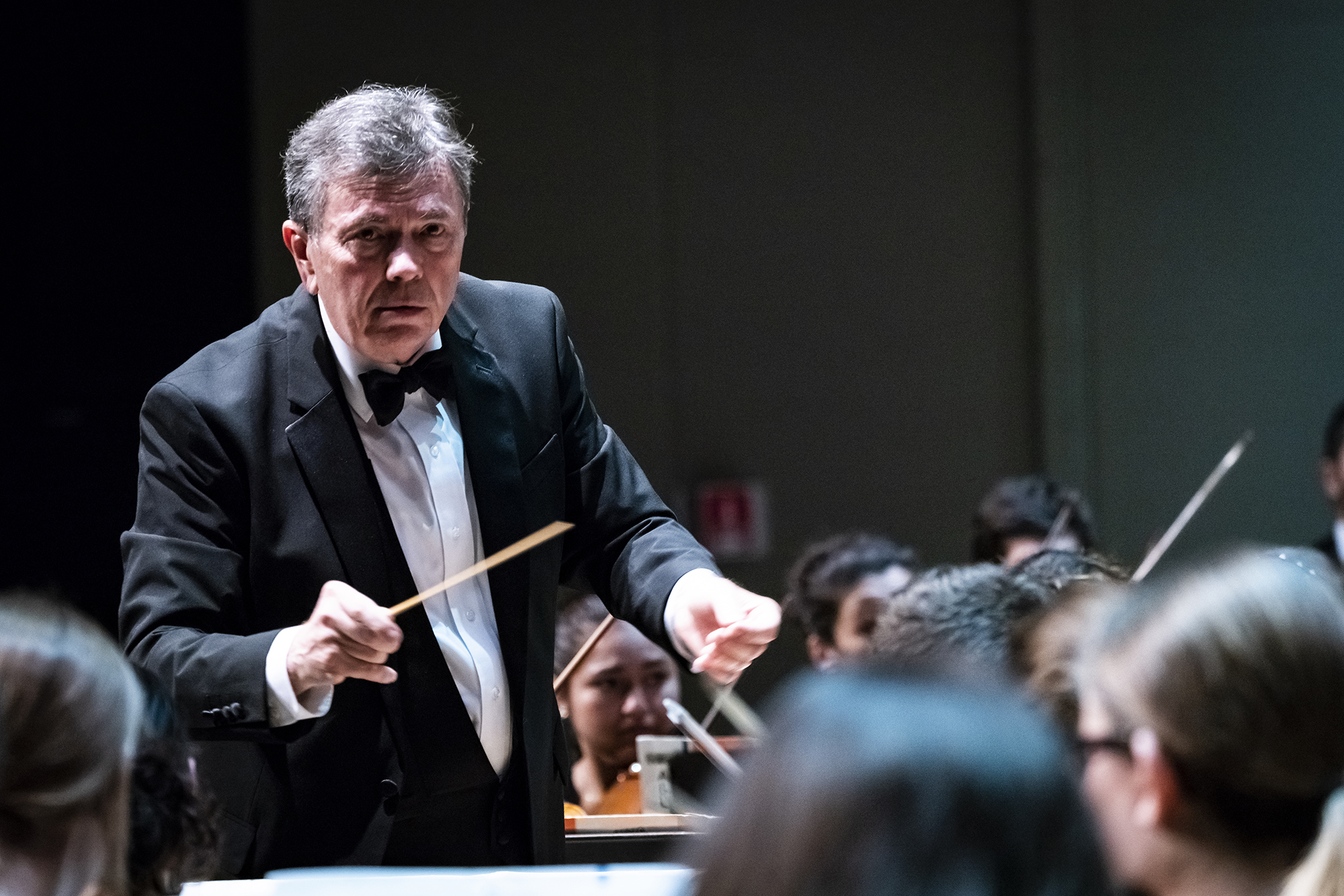
Schwarz has formed a special student ensemble—the Frost Repertoire Orchestra—to work with his conducting students. As part of a curriculum of 26 scores over 26 weeks, the students have two sessions per week with the orchestra. In his classes, Schwarz’s instruction comprises score study, sound and balance, intonation, the concept of rhythm and the importance of phrasing and gestures.
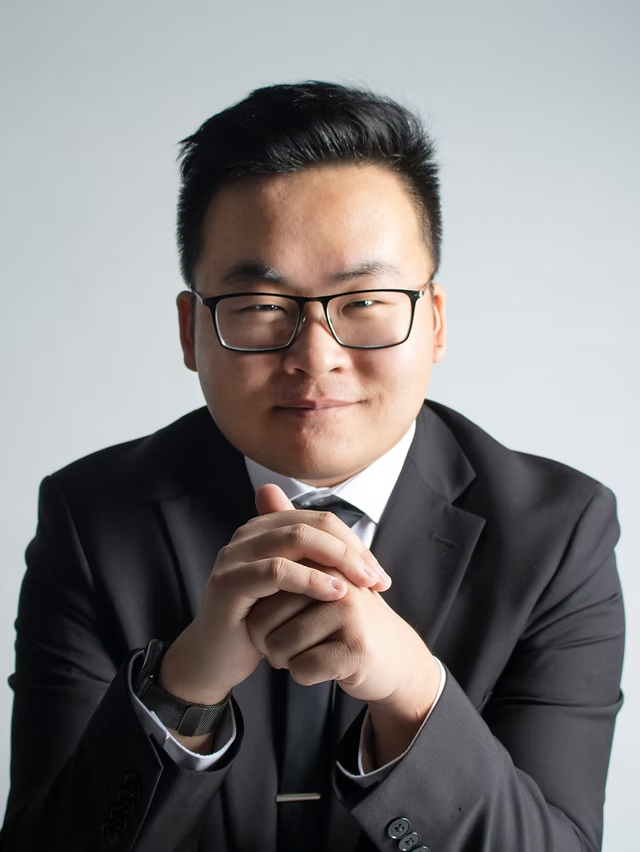
Yun Cao has been one of the most visible of Schwarz’s students. He has conducted the two most recent productions of the Frost Opera Theater—Kurt Weil’s Street Scene in 2024 and Jonathan Dove’s Flight in 2025—and will lead Mozart’s Cosí fan tutte in February.
Cao said Schwarz went over the operas “measure by measure, note by note” before the rehearsals and performances. Cao characterizes Schwarz’s approach as “putting the music first.” Now in his fifth year of study with his mentor, Cao believes Schwarz has made him “a much more organic and authentic musician.” Alberto Bade, who teaches and conducts the orchestra at Miami-Dade College North Campus and continues as a graduate assistant conductor at Frost, feels that “Schwarz has changed my way of teaching because he motivates encouragement and a positive vibe.” Sophie Mok, now assistant conductor of the North Carolina Symphony, said he expanded her horizons and her understanding of American music by sharing his experiences with composers. “He taught me how to work with an orchestra and navigate rehearsal time,” Mok emphasized.
American music has indeed been a pivotal element of Schwarz’s repertoire throughout his career. Probably, no conductor has led as many premieres and American works from the past since the legendary Serge Koussevitzky, music director of the Boston Symphony in the 1930’s and 40’s.
Schwarz personally knew Samuel Barber, William Schuman, Aaron Copland, David Diamond and Leonard Bernstein and studied composition with Paul Creston which he describes as “icing on the cake.” (Although reluctant to play his own scores, Schwarz is also a gifted composer.) He played under Bernstein and credits him as well as Pierre Boulez and Erich Leinsdorf as being important influences on his podium work.
Schwarz’s transformation of the Palm Beach Symphony has been just as remarkable as his work with the Frost students. For many years, the ensemble played at small museum and school auditoriums, never having a permanent venue for performances. There were occasional performances at the Kravis Center in West Palm Beach which has long served as a hall that showcases visiting American and international orchestras.
When Ramon Tebar, the orchestra’s former music director, accepted an engagement at the Vienna State Opera and would not be available for a scheduled Palm Beach concert, Schwarz (whose Frost appointment was announced that week) took over the previously announced program in April, 2019. Leading Mozart’s Piano Concerto No. 12 (with the late Leon Fleisher as soloist) and Bruckner’s Symphony No. 7, the musical results were impressive. Previously, a highly variable orchestra, Schwarz was able to rouse the group to soaring heights.
Schwarz said that he was deeply impressed that the musicians wanted to improve and for the orchestra’s corporate performance to reach the highest standards. “ I heard tremendous potential, the willingness to play well and felt the players were anxious to change the level,: he recalled. About a month later, Schwarz was named music director.

In the six seasons he has conducted the Palm Beach players, the performance level has attained major league status. Whether leading Mozart, Tchaikovsky, Dvořák or Mussorgsky, he has drawn performances that would do credit to the best regional ensembles. He has been delighted by the response of the Palm Beach County audience. Schwarz says he has found his listeners to be “as discerning and sophisticated as any audience in major music centers.”
On the debit side he has found getting concert dates from the Kravis Center management difficult, causing problems with arranging programs and engaging soloists. Still, he believes the organization has “extraordinary potential.”
Despite scheduling frustrations, Schwarz has brought such renowned soloists as pianists Jean-Yves Thibaudet, Yefim Bronfman, Emmanuel Ax and Garrick Ohlsson, violinists Gil Shaham Leonidas Kavakos, Pinchas Zukerman, Sarah Chang and Midori and mezzo-soprano Susan Graham in concert with the orchestra.
Except for Howard Hanson Symphony No. 2, he has programmed short works by American composers, wanting to get the audience’s trust before delving into the rich American legacy of symphonists that he has championed. “I do anticipate change,” he indicated, planning to present more adventurous scores for his Palm Beach County concertgoers.
Palm Beach Symphony executive director David McClymont says Schwarz has elevated the orchestra—“deepening the sound and pursuing a culture of excellence, unity and purpose” throughout the organization. He sees increasing the ensemble’s educational programs and branding the orchestra as a “symbol of excellence” as important future goals to pursue with Schwarz. (The orchestra’s educational public television programs, led by Schwarz, have received Emmy nominations.)
Schwarz opened the Palm Beach season this past Sunday with Frost dean Shelly Berg displaying his jazz chops in Gershwin’s popular Rhapsody in Blue. Among the works on the season’s coming programs, are Richard Strauss’ massive Alpine Symphony, Shostakovich’s Fifth Symphony and Holst’s sonic spectacular The Planets. There will also be new and recent pieces by Paul Moravec, Gabriela Lena Frank and Daniel Asia.
Chauncey Patterson, principal viola of the Palm Beach Symphony and a member of the faculty at Lynn University Conservatory of Music, points out that “Gerard Schwarz treats the orchestra like a larger chamber ensemble.” Patterson calls Schwarz’s rehearsal technique “the best in the business,” especially praising his meticulously marked scores and bowings. He regards the difference in the orchestra’s performance since Schwarz’s directorship as “the distance between night and day”
Patterson has participated in another major Schwarz project – the public television series All Star Orchestra. (Other Palm Beach orchestra members have also played in the programs.) The programs feature Schwarz leading a large orchestra composed of members from leading symphonic ensembles from around the United States, often their group’s first chair players. Schwarz discusses the scores with brief musical illustrations before playing the works in full. To date, 20 hour-long shows have been filmed, winning multiple Emmy Awards.
Schwarz’s enthusiasm for the show is palpable. “The greatest way to grow to grow audiences for classical music is television, exposing both kids and adults.” He programs works by the top 100 composers with minimal repeats and plans future telecasts with further emphasis on twentieth century composers. In quality and perceptive commentary, his telecasts approach the level of Bernstein’s historic broadcasts.
His extensive career has in no way abated Gerard Schwarz’s enthusiasm for making music. “ I love orchestral sound and repertoire. Every piece is just so thrilling from when I open the first page,” he proclaimed. That continued dedication and love for his art has been greatly beneficial for South Florida’s orchestral players, music students, and concertgoers alike.
Gerard Schwarz conducts the Frost Symphony Orchestra in Andrzej Panufnik’s Sinfonia Sacra, Devin Cholodenko’s Do the Angels in the Sky Sing to the Moon, Dvořák’s Symphony No. 8 and a Beethoven piano concerto TBA with student soloist 7:30 p.m. Saturday at UM Gusman Concert Hall in Coral Gables. music.um.edu
Gerard Schwarz conducts the Palm Beach Symphony in Rimsky-Korsakov’s Snow Maiden Suite, Gabriela Lena Frank’s Elegia Andina, Falla’s Three-Cornered Hat Suite and Rachmaninoff’s Rhapsody on a Theme of Paganini with Misha Dichter 7:30 p.m. December 16 at the Kravis Center in West Palm Beach. palmbeachsymphony.org

